
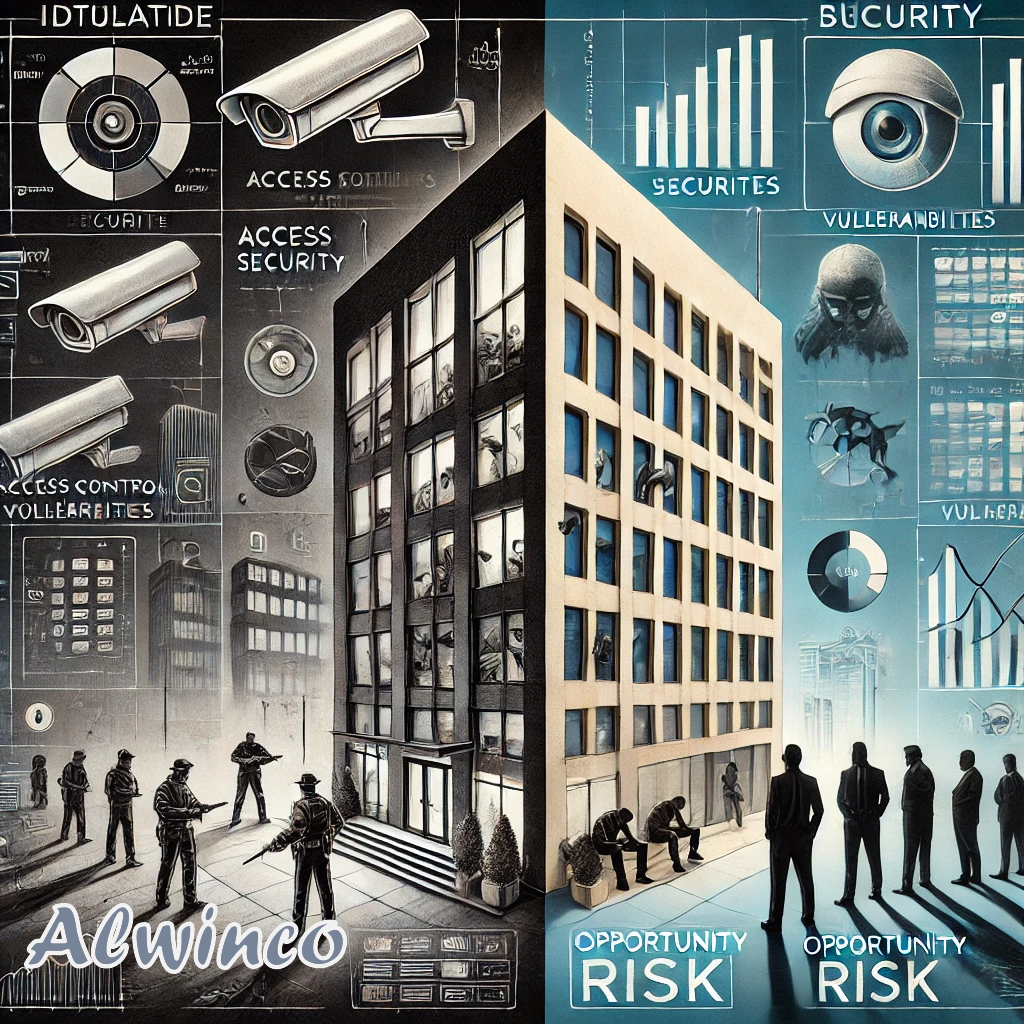
When international organisations expand into South Africa, they invest significant time and resources into understanding local labour laws, taxation, environmental requirements, logistics, and regulatory compliance. They know that operating in a new country requires local knowledge.
Yet security is often approached differently.
Many organisations assume that a security plan or risk assessment developed overseas can simply be applied to their South African operations. While this may appear logical, it overlooks one critical fact.
Crime is local.
The methods criminals use, the opportunities they exploit, and the vulnerabilities they identify are shaped by the environment in which they operate. A security risk assessment can only be as accurate as the assessor’s understanding of that environment.
This is why an assessment conducted from another country, no matter how well intended or professionally presented, can never provide the same level of understanding as one conducted by an experienced independent South African security risk assessment company.
The reason is simple.
Security is not universal.
Every country presents its own risks, criminal trends, infrastructure challenges, business practices, and operating environments. South Africa is no different. In many respects, it is unlike anywhere else.

Understanding these differences is what separates a generic assessment from one that identifies the real risks.
A consultant working overseas may review architectural drawings, security layouts, policies, photographs, and technical specifications. They may assess the design against international standards and conclude that everything appears satisfactory.
A South African assessor sees something different.
They understand how criminals have adapted to local conditions. They recognise weaknesses that cannot be identified from a drawing or a video conference. They understand how neighbouring properties, access routes, informal settlements, traffic patterns, response times, infrastructure failures, employee routines, and local criminal behaviour can influence the security of a business.
These are not theoretical risks.
They are practical realities that influence security every day.
This is one of the biggest misconceptions in the security industry.
Many people believe that security is about Security hardware and guards.
In reality, security is about understanding risk.
Technology only becomes effective once the risks have been correctly identified.
Installing more cameras, higher fences, additional lighting, or sophisticated access control systems does not automatically make a business more secure. If those measures address the wrong risks, they create nothing more than the impression of security while leaving the real opportunities for crime untouched.
This happens more often than many organisations realise.
Criminals do not assess a business by looking at the specification of its security equipment.
Criminals assess opportunity.
They identify predictable behaviour. They study routines. They look for weaknesses in operations, management, maintenance, physical design, and human behaviour. They exploit the smallest opportunity if it provides the easiest path towards achieving their objective.
Understanding this requires more than knowledge of security hardware.
It requires an understanding of how crime develops within the South African environment.
This is why independent security risk assessments are so valuable.
An independent assessment does not begin with products or solutions.
It begins by asking different questions.
What does the organisation need to protect?
What are the greatest threats to the business?
How could those threats materialise? What practical measures will reduce the risk?
Only after these questions have been answered can meaningful security decisions be made.
This approach often produces findings that surprise business owners and senior management.
The most significant risks are not always the ones they expected.
In many cases, organisations have invested heavily in security equipment while overlooking weaknesses in operational procedures, site design, management practices, maintenance, or daily routines. These weaknesses often create greater opportunities for criminal activity than the absence of additional technology.
An independent assessment provides something far more valuable than a list of products.
It provides understanding.
International businesses need this understanding because corporate offices often make security decisions from thousands of kilometres away. Senior executives rely on reports to understand what is happening at facilities they may rarely visit.
The quality of those decisions depends entirely on the quality of the information they receive.
If the assessment fails to identify the real risks, every decision that follows is based on incomplete information.
That is why local experience matters.
At Alwinco, we focus exclusively on independent physical security risk assessments.
We do not install security equipment, and we do not provide guarding services.
We do not manage security contracts, nor do we receive any financial benefit from the corrective measures we recommend.
Our responsibility is to identify risks and provide objective recommendations based solely on our findings.
This independence allows businesses to make informed decisions without the influence of product sales or service contracts.
Over the past two decades, we have conducted independent security risk assessments across a wide range of industries, including commercial developments, industrial facilities, warehouses, residential estates, shopping centres, mines, farms, schools, hospitals, corporate facilities, and government-owned organisations.
Although every industry presents different challenges, one principle remains the same.
No two businesses have identical risks. Every location and operation is different.
Every organisation creates its own combination of security risks, making assumptions one of the greatest risks any business can make.
This is particularly relevant for international organisations that apply the same security standards across multiple countries.
Corporate standards are important because they create consistency throughout an organisation.
However, consistency should never replace local knowledge.
A global security standard should provide the framework.
An independent South African security risk assessment applies that framework to the local environment.
This ensures that organisations direct security investments toward the risks that actually exist rather than those they assume exist.
Ultimately, the objective of a security risk assessment is not to recommend more security.
Its purpose is to help organisations understand their risks before they decide how to manage them.
Once a business understands where its risks exist, why they exist, and how criminals could exploit them, it can make informed decisions to improve security, protect its people, safeguard its assets, and strengthen long-term business continuity.
International organisations understand the importance of using local legal experts, local accountants, local engineers, and local environmental specialists because they recognise that every country operates differently.
Security should be approached in exactly the same way.
Understanding South Africa requires South African experience.
Because understanding and protecting a business requires local knowledge, it is not simply an advantage. It is essential. That is why Alwinco works with a designated liaison person whenever we conduct an independent security risk assessment in another country.
It is one of the most valuable forms of security an organisation can have.
Understanding Security – Why Risk Understanding Comes Before Hardware Installation